History of JDA
The origins: Actinides elements and compounds are particularly difficult to study. From a theoretical point of view, electrons from 5f shell have a behaviour intermediate between electrons from the 3d shell in transition metals and electrons from the 4f shell in rare earths. The 4f shell in rare earths is localized already in cerium, whose limit position results in particular properties. The 5f shell in actinides becomes localized only from americium, so that particular behaviours are common for protactinium, uranium, neptunium and plutonium. Moreover, relativistic effects are important and must be taken into account in the calculation of wave functions by theoreticians. Experimentally, the situation is not simpler. Actinides are all radioactive elements, which make them difficult to handle and prevent non-equipped laboratories from studying them.
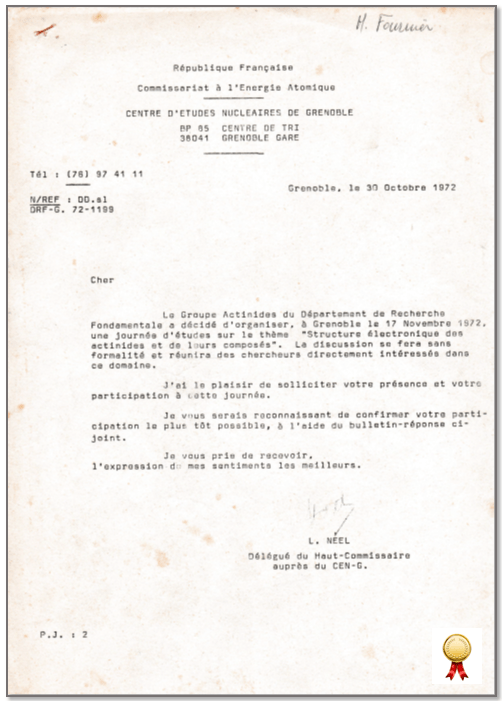
Invitation letter to the first “Journée Actinides” signed by Louis Néel
It appeared to Jean-Marc Fournier (CENG, now CEA) that collaboration was necessary in particular between chemists producing samples and physicists studying their properties, not always in the same laboratories and institutions. For example, it took him more than 2 years to obtain reliable measurements of the magnetic susceptibility of plutonium metal (Solid State Communications 10, 141-144 (1972). This is what motivated Jean-Marc Fournier to organize an informal meeting to discuss openly and provide opportunities for collaborations. This meeting was called “Journée Actinides” and received the support of Werner Müller (ITU, now JRC-Karlsruhe), Bernard Coqblin (University of Orsay) and Alain Blaise (CENG, now CEA).
The first “Journée Actinides” The meeting receives the remarkable mentoring of Louis Néel (1904-2000), Nobel Prize laureate in 1970 for his discoveries of antiferromagnetism and ferrimagnetism in the 1930s and 1940s, and founder of several research institutes in Grenoble (CENG, ILL, etc) forming a major concentrated research area known as “scientific peninsula” or “scientific polygon”.
on November 17th, 1972 in Grenoble (France)
about 20 scientists invited by Louis Néel, from the Nuclear Research Centre of Grenoble (CEN-G, now CEA), the Nuclear Research Centre of Fontenay-aux-Roses (CEN-FAR, now CEA), the University of Orsay, the National Scientific Research Center (CNRS) and the Institute for Transuranium Elements (ITU, now JRC-KA), present their research on actinides at an informal meeting called “Journée Actinides” (“Actinides Day”).
After CEA, the 2 other partners (University of Orsay and ITU) organize in 1973 the “Journée Actinides” meeting at their places, in Orsay and Karlsruhe.
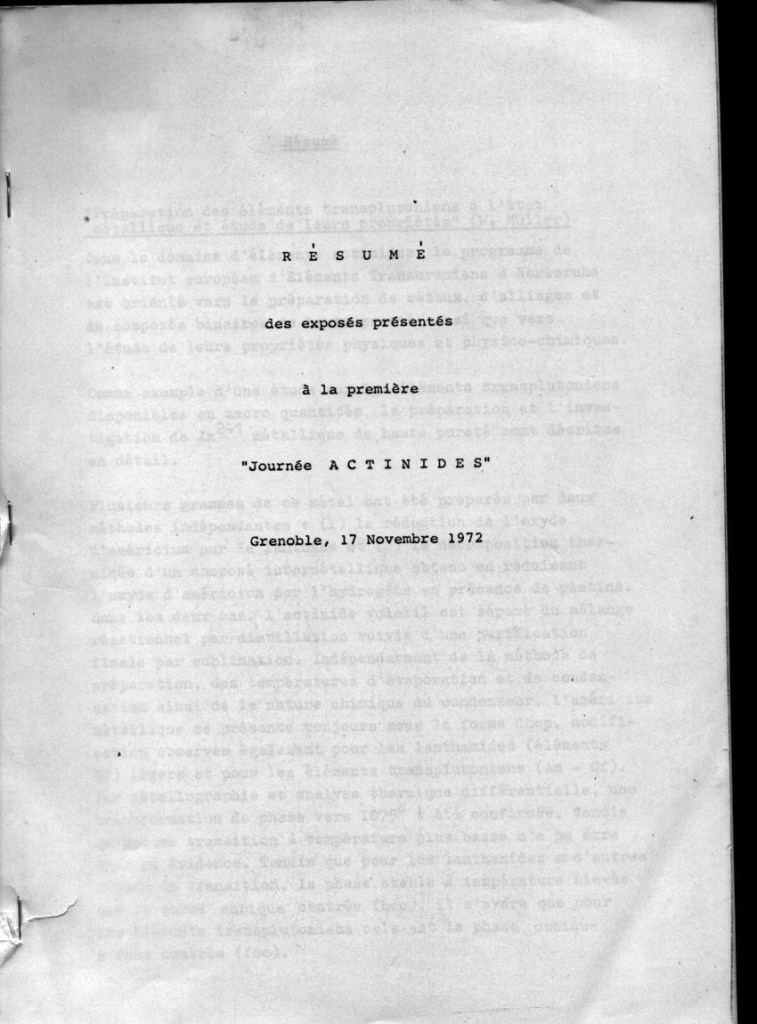
Cover page of the summary of the 1st “Journée Actinides”

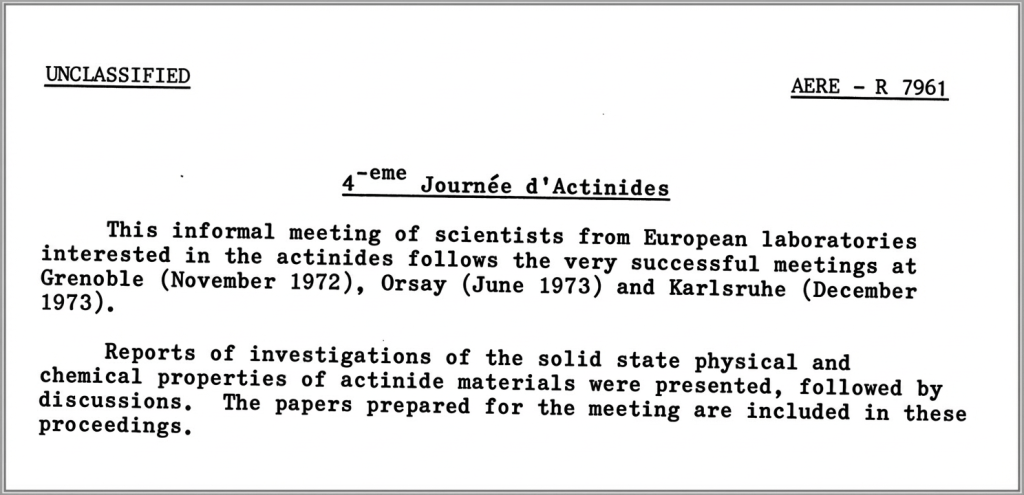
Introduction of the proceedings of the 4ème “Journée d’Actinides”
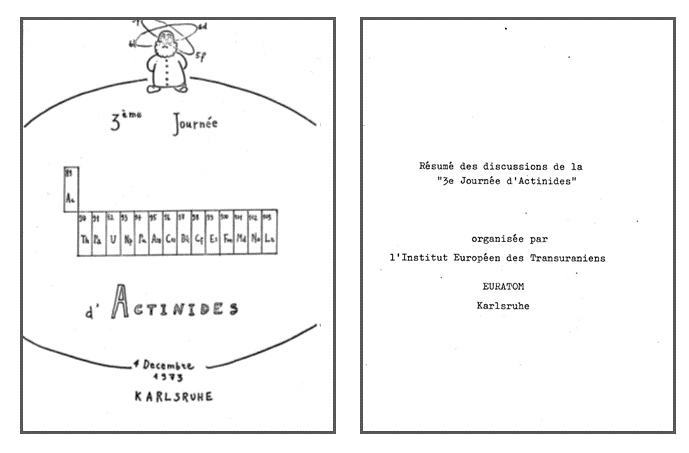
Cover page of the 3ème “Journée d’Actinides”
The enlargement: The success of the meeting, with its informal format dealing with recent or ongoing research in the field of actinides attracts other partners. At the 3rd Journée, there are 11 participants from ITU, 7 from CEA, 4 from Orsay and Paris, but also 5 from University of Surrey (UK), 2 from the Atomic Energy Research Establishment (AERE, Harwell), 3 from Université de Liège, and participants from other organizations in Karlsruhe, Darmstadt and Strasbourg. The discussions and proceedings, originally integrally in French, now also include more and more English. In 1974, the meeting is organized in Harwell (UK).
Establishing as a conference and adjusting the format:
In 1978 in Liège (Belgium), the “Journée d’Actinides” is organized for the first time over 2 days and takes its current name of “Journées des Actinides” (with plural “Journées”). In 1986 in Eibsee (Germany), the “Journées des Actinides” extends the format to 3 days and another half-day is added in 1989 in Madonna di Campiglio (Italy), reaching the point of equilibrium that we still experience today. The meeting is becoming more and more international.
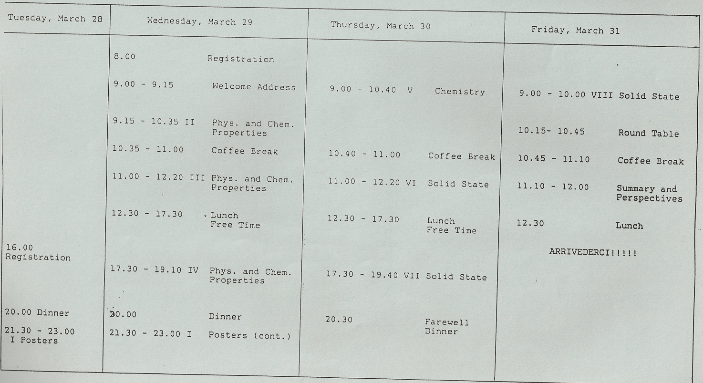
Logos of the 16èmes and 19èmes Journées des Actinides and program of the 19èmes Journées des Actinides
Extending to Rare Earths: The wider participation and evident interest of comparing chemical and physical properties or establishing inactive surrogates, not mentioning more and more stringent regulations for handling actinides, has led to a progressive increase of rare earths contributions in the conference.
Extending to Israel: Israeli scientists have rapidly actively participated to the Journées des Actinides. Indeed, they organized the 13èmes Journées des Actinides in Elat (Red Sea, 1983), as well as the 32èmes and 44èmes in Ein Gedi (Dead Sea, 2002 and 2014).
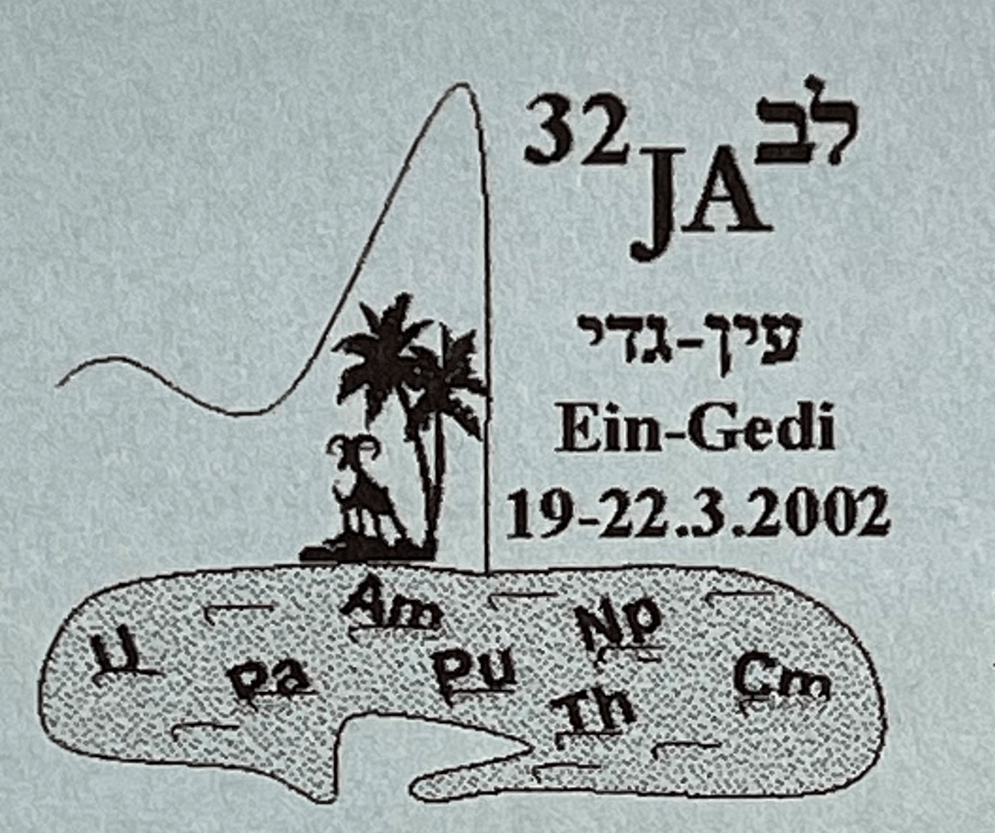
Logos of the 13èmes and 32èmes Journées des Actinides
Extending to Eastern Europe: In 1990, the conference is for the first time organized in an eastern country, Czechoslovakia. The Prague group had been participating to the Journées des Actinides since 1986 and hosts the actinides community 4 years later.
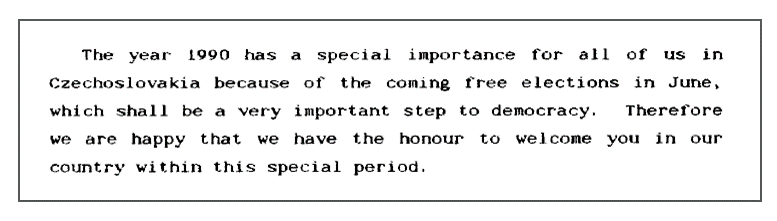
Forewords in the proceedings of the 20ème “Journée d’Actinides”
The spirit of the conference: The informal character of the meeting and the fruitful dialogue between chemists and physicists, both inherited from the early Journées have forged the soul of the conference. This is well described for example in the proceedings of the 9èmes Journées des Actinides (see figure 5). These precious assets are not only an old tradition of the Journées but its raison d’être, bridging gaps between scientific fields and scientist generations in a friendly atmosphere where everybody can present his work and discuss with anybody.
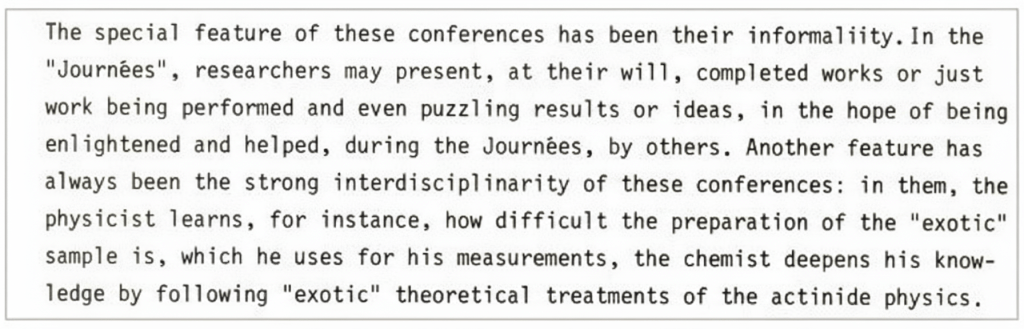
Spirit of the conference as expressed in the forewords of the proceedings of the 9èmes Journées des Actinides (1979) in Karlsruhe.
Social Excursions:
The informal and friendly character of the conference has been reinforced by the organization of a half-day excursion in 1980, a successful event which then became a tradition at the Journées.
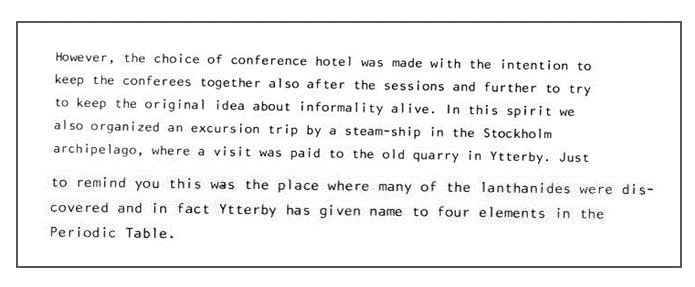
Forewords of the 10èmes JdA in Stockholm (Sweden, 1980)
The excursion depends on the local possibilities and has sometimes links with actinides, as for example the visit of uranium mines
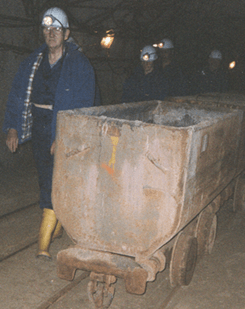
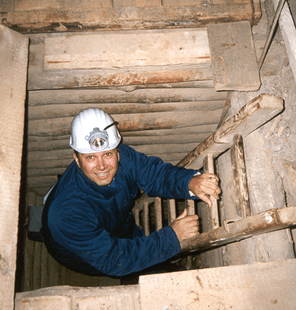
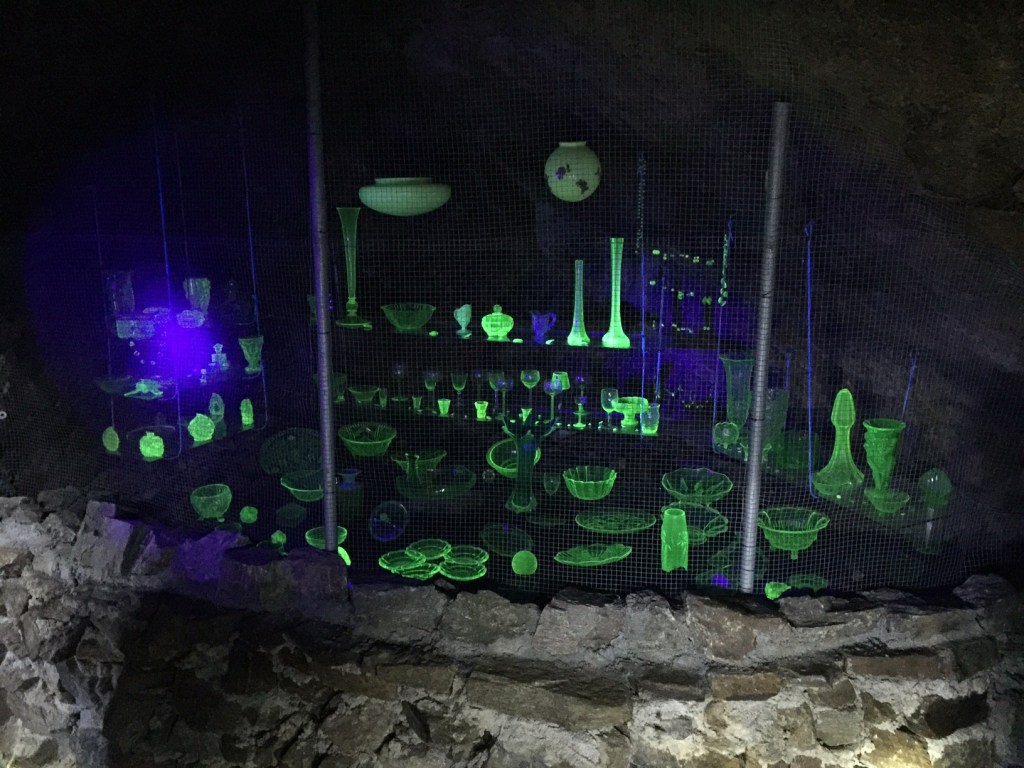
(left) Visit of the Erzgebirge Königstein uranium mine (30èmes Journées des Actinides). (right) visit of the Kowary Podgorze uranium mine with uranium glasses glowing green in UV light (47èmes Journées des Actinides)
Training the young generation: To facilitate and accelerate the integration and training of students and young scientists in the field, a satellite school on the Physics and Chemistry of Actinides was initiated in 1996 and organized for the first time in Szklarska Poreba (Poland) during the days preceding the 26èmes Journées, allowing attendants to participate to both events. This biennial school has since then been organized every 2 years, in coordination with the Journées des Actinides.
Fostering Collaboration: With increasing safety and security standards and regulations, working with uranium and thorium has become more difficult over the years, not mentioning transuranics. In parallel, the interest and demand for experiments on these materials has also increased due to, in addition to fundamental properties and fuel applications, raising needs for wastes, forensics and development of new applications (space exploration, medical isotopes…). This has resulted in many collaborations and some formalized programs like for example the opening of ITU (now JRC-Karlsruhe) laboratories to external researchers through an Open Access program – pioneer at JRC – that later extended to other sites of JRC.
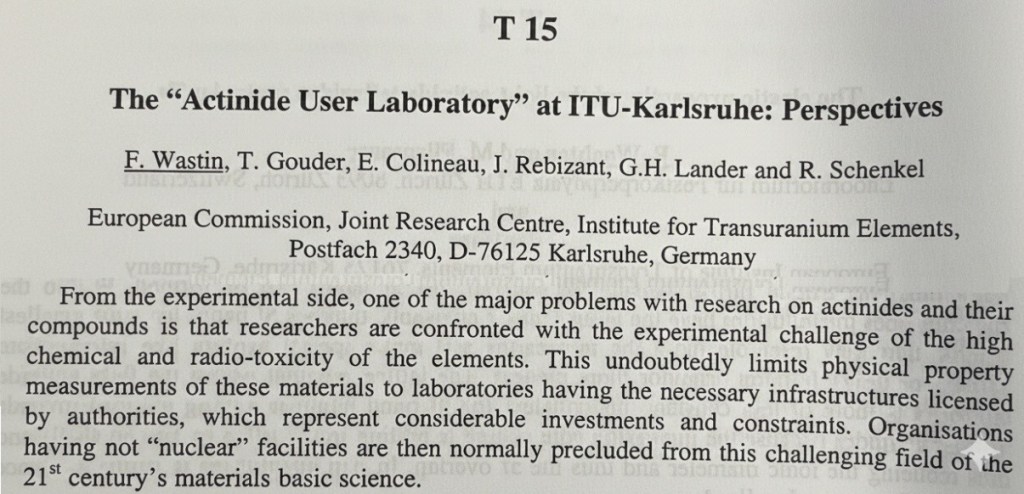
First presentation of the “Actinide User Laboratory” during the 30èmes Journées des Actinides (Dresden, 2000)
Encouragement and Recognition: Awards are regularly offered to participants since the 42èmes Journées in Bristol (UK, 2012), to recognize the lifetime or mid-career contributions to actinide science and to encourage young scientists delivering brilliant presentations at the conference.
Exceptional circumstances: Since its inception in 1972, the conference has always been organized every year (even twice in 1973), except in 2020: The 50èmes Journées had to be postponed to 2021 because of the brutal explosion of the COVID-19 epidemics. As the sanitary and administrative situation was still difficult in 2021, the conference has been organized online from Rennes (France). The resilient organizers have virtually organized 3 conferences, with only the last version (online) being finally implemented.
The legends: Some brilliant scientists with strong personalities have written the history of the Journées des Actinides through outstanding participation and contribution, engaged presentations and passionate debates. We can cite among others
Barry Cooper, Oscar Vogt, Peter Wachter, Robert Troc, Wojtech Suski, Bernard Coqblin and many others….
JdA Conferences:
1972 : „première Journée Actinides“, Grenoble (France), 17 nov
1973 : „Meeting on actinides“, Orsay (France), 12 jun
1973 : „3ième journée d‘actinides“, Karlsruhe (Germany), 4 dec
1974 : „4ième Journée d‘Actinides“, Harwell, 26 jun
1975 : „5ième Journée d‘Actinides“, Fontenay aux Roses (France), 27 feb
1976 : „6ième Journée d‘Actinides“, Namur (Belgium), 25 feb
1977 : „7ième Journée des Actinides“, Paris (France), 10 mar
1978 : „8th Journées des Actinides“, Liège (Belgium, 17-18 apr
1979 : „9èmes Journées des Actinides“, Karlsruhe (Germany), 31 may-1 jun
1980 : „10èmes Journées des Actinides“, Stockholm (Sweden), 27-28 may
1981 : „11èmes Journées des Actinides“, Venezia (Italy), 25-27 may
1982 : „12èmes Journées des Actinides“, Orsay (France), 24-25 may
1983 : „13èmes Journées des Actinides“, Elat (Israel) 26-28 April
1984 : „14èmes Journées des Actinides“, Davos (Switzerland), 2-3 apr
1985 : „15èmes Journées des Actinides“, Liège (Belgium), 26-27 feb
1986 : „16èmes Journées des Actinides“, Eibsee (Germany), 28-30 apr
1987 : „17èmes Journées des Actinides“, Signal de Chexbres (Switzerland), 26-28 mar
1988 : „18èmes Journées des Actinides“, Paris (France), 20-22 apr
1989 : „19èmes Journées des Actinides“, Madonna di Campiglio (Italy), 29-31 mar
1990 : „20èmes Journées des Actinides“, Prague (Czechoslovakia), 17-20 apr
1991 : „21èmes Journées des Actinides“, Montechoro (Portugal), 28 apr-1 may
1992 : „22èmes Journées des Actinides“, Méribel (France), 22-25 apr
1993 : „23èmes Journées des Actinides“, Schwarzwald (Germany), 20-23 apr
1994 : „24èmes Journées des Actinides“, Obergurgl (Austria), 15-19 apr
1995 : „25èmes Journées des Actinides“, L‘Aquila (Italy), 7-11 apr
1996 : „26èmes Journées des Actinides“, Szklarska Poreba (Poland) 10-14 April + 1st school
1997 : „27èmes Journées des Actinides“, Dijon (France) 26-29 April
1998 : „28èmes Journées des Actinides“, Uppsala (Sweden) 14-16 May + 2nd school
1999 : „29èmes Journées des Actinides“, Luso (Portugal) 15-17 April
2000 : „30èmes Journées des Actinides“, Dresden (Germany) 4-6 May + 3rd school
2001 : „31èmes Journées des Actinides“, Saint Malo (France) 26-28 April
2002 : „32èmes Journées des Actinides“, Ein Ghedi (Israel) 19-22 March + 4th school
2003 : „33èmes Journées des Actinides“, Prague (Czech Republic) 27-29 April
2004 : „34èmes Journées des Actinides“, Heidelberg (Germany), 17-20 apr + 5th school
2005 : „35èmes Journées des Actinides“, Baden (Austria), 23-26 apr
2006 : „36èmes Journées des Actinides“, Oxford (UK), 1-4 apr + 6th school
2007 : „37èmes Journées des Actinides“, Sesimbra (Portugal), 24-27 mars
2008 : „38èmes Journées des Actinides“, Wroclaw (Poland), 12-15 apr + 7th school
2009 : „39èmes Journées des Actinides“, la Grande Motte (France) 28-31 March
2010 : „40èmes Journées des Actinides“, Genève (Switzerland) 27 March-1 April
2011 41 Stara Lesna (Slovakia) 9-12 April + 8th school
2012 42 Bristol (UK 18-21 April + 9th school
2013 43 Sestri-Levante (Italy) 7-9 April
2014 44 Ein Ghedi (Israel) 24-28 April + 10th school
2015 45 Pruhonice, (Czech Republic), 15-19 April
2016 46 Alpe d’Huez (France) 17 – 19 March + 11th school
2017 47 Karpacz-(Poland) 26-30 March
2018 48 Porto Novo / Vimeiro (Portugal) 21-24 March + 12th school (ITN Lisbon)
2019 49 Erice (Italy) 14-18 April
2020 Erquy (France), delayed to 2021 (COVID-19)
2021 50 Rennes (France) (online / COVID-19) 22-25 March + 13th school (online)
2022 51 Santa Margherita (Italy) 10-14 April
2023 52 Dresden (Germany) 17-21 April + 14th school
2024 53 Lille (France) 15-18 April
2025 54 Annecy (France) 18-21 March + 15th school (16-17 March, Grenoble)

 Journées des Actinides